What Is Linen Fabric? A Traveler’s Guide 2026
📅 Updated: | ✍️ Written by: youOn Boutique — Fashion editorial and styling team
What is linen fabric? Linen is a natural textile made from the fibers of the flax plant. Known for its exceptional breathability, strength, and cool hand-feel, it has been worn for thousands of years and remains one of the most practical and refined choices for hot, humid climates like Vietnam’s.
📅 Cập nhật: Tháng 9/2026 | ✍️ Biên soạn bởi: youOn Boutique — Đội ngũ tư vấn thời trang
What Is Linen Fabric? Origins and Definition
To understand what is linen fabric, start with the plant itself. Linen is produced exclusively from the long, strong fibers found inside the stems of the flax plant (Linum usitatissimum). Unlike cotton, which comes from a seed boll, or silk from insect cocoons, linen begins as a slender, blue-flowered annual that thrives in temperate regions with moderate rainfall.
The process of turning flax into cloth is ancient. Archaeological evidence shows linen textiles dating back more than 30,000 years in some regions, and the fabric was already highly refined in ancient Egypt, where it was used for clothing, burial shrouds, and even sails. The word “linen” itself shares roots with the Latin linum and the Greek linon, both meaning flax. Over centuries the same material traveled along trade routes, appearing in European court dress, monastic robes, and everyday workwear.
In Vietnam, linen clothing has found a natural second home. The country’s tropical heat and high humidity reward fabrics that move air and release moisture quickly. What began as an imported European textile has become a quiet favorite among both local women and international travelers seeking something cooler and more refined than ordinary cotton or synthetic blends. When people ask what is linen fabric in the context of modern fashion, the answer remains simple: it is the pure, plant-based cloth that still carries the quiet authority of its long history while performing beautifully in daily life.
Key Characteristics of Linen Fabric
Several concrete qualities explain why linen continues to earn its reputation.
First, breathability. The hollow structure of flax fibers allows air to circulate freely against the skin. In temperatures above 30 °C, this creates a noticeable cooling effect that many wearers describe as almost instantaneous once the fabric settles on the body.
Second, moisture-wicking. Linen can absorb up to 20 percent of its own weight in moisture before feeling damp to the touch. It then releases that moisture into the air faster than most natural fibers, which is why a linen shirt rarely clings after a humid afternoon walk through District 1 or a morning market visit.
Third, durability. Flax fibers are among the strongest plant fibers used in clothing. A well-made linen garment often becomes softer with each wash yet retains its structural integrity for years, developing a gentle, lived-in character rather than thinning or pilling.
Fourth, texture and drape. Pure linen has a distinctive, slightly irregular surface that catches light in a soft, matte way. The fabric holds shape without stiffness, falling in clean, architectural lines that suit both structured dresses and relaxed trousers.
Fifth, temperature regulation. Linen feels cool in heat and surprisingly insulating in air-conditioned spaces, making it practical for travelers who move between outdoor humidity and indoor chill throughout the day.
These traits together answer the practical side of what is linen fabric: a textile engineered by nature for comfort in demanding climates.

Premium Linen vs Regular Linen: What’s the Difference
Not all linen is equal. The term “premium linen fabric” usually refers to cloth made from longer, finer flax fibers that have been carefully selected and finished.
Regular linen often comes from shorter fibers or less refined batches. It can feel coarser at first touch and may show more pronounced wrinkling. Premium linen, by contrast, undergoes additional processes—careful retting, finer spinning, and often a gentle enzyme or mechanical finish—that soften the hand without sacrificing the fabric’s natural character. The result is a smoother surface that still breathes and wicks moisture, yet feels more refined against the skin from the first wear.
The pure linen meaning is important here. True premium linen is 100 percent flax. Blends that mix linen with cotton or synthetic fibers may carry the name “linen-look,” but they lose some of the moisture management and cooling properties that make pure linen distinctive. When a garment is labeled pure linen, it signals that the entire cloth comes from the flax plant alone.
In the hand, premium linen tends to drape more fluidly and develop a soft, almost luminous patina over time. Regular linen remains serviceable and strong, yet rarely achieves the same quiet elegance. For travelers who want clothing that looks considered rather than utilitarian, the difference in finishing and fiber length is noticeable within the first few hours of wear.

Linen vs Cotton: Which Is Better for Vietnam’s Climate
The comparison between linen vs cotton is one of the most common questions from visitors new to the material.
Cotton is soft, familiar, and widely available. It absorbs moisture well, but once saturated it tends to hold that dampness against the skin, which in Vietnam’s humidity can feel heavy and slow to dry. Linen, by contrast, absorbs moisture and releases it more rapidly, so the fabric rarely feels clammy even after a long day outdoors.
In terms of structure, cotton often clings more readily when wet, while linen maintains a cleaner silhouette. Linen also tends to feel cooler at the same ambient temperature because of its superior airflow. Many people who spend summers in Ho Chi Minh City or Hanoi eventually prefer linen for daytime pieces precisely because it stays lighter and fresher as the heat builds.
That said, cotton remains excellent for underlayers or cooler evenings. The choice is rarely absolute; it depends on the specific garment and the day’s itinerary. A deeper side-by-side examination of fiber performance, care, and style can be found in our companion piece on linen versus cotton for tropical climates.
Why Linen Is a Popular Choice Among Travelers in Vietnam
Travelers quickly discover practical reasons why linen clothing Vietnam has become a quiet favorite.
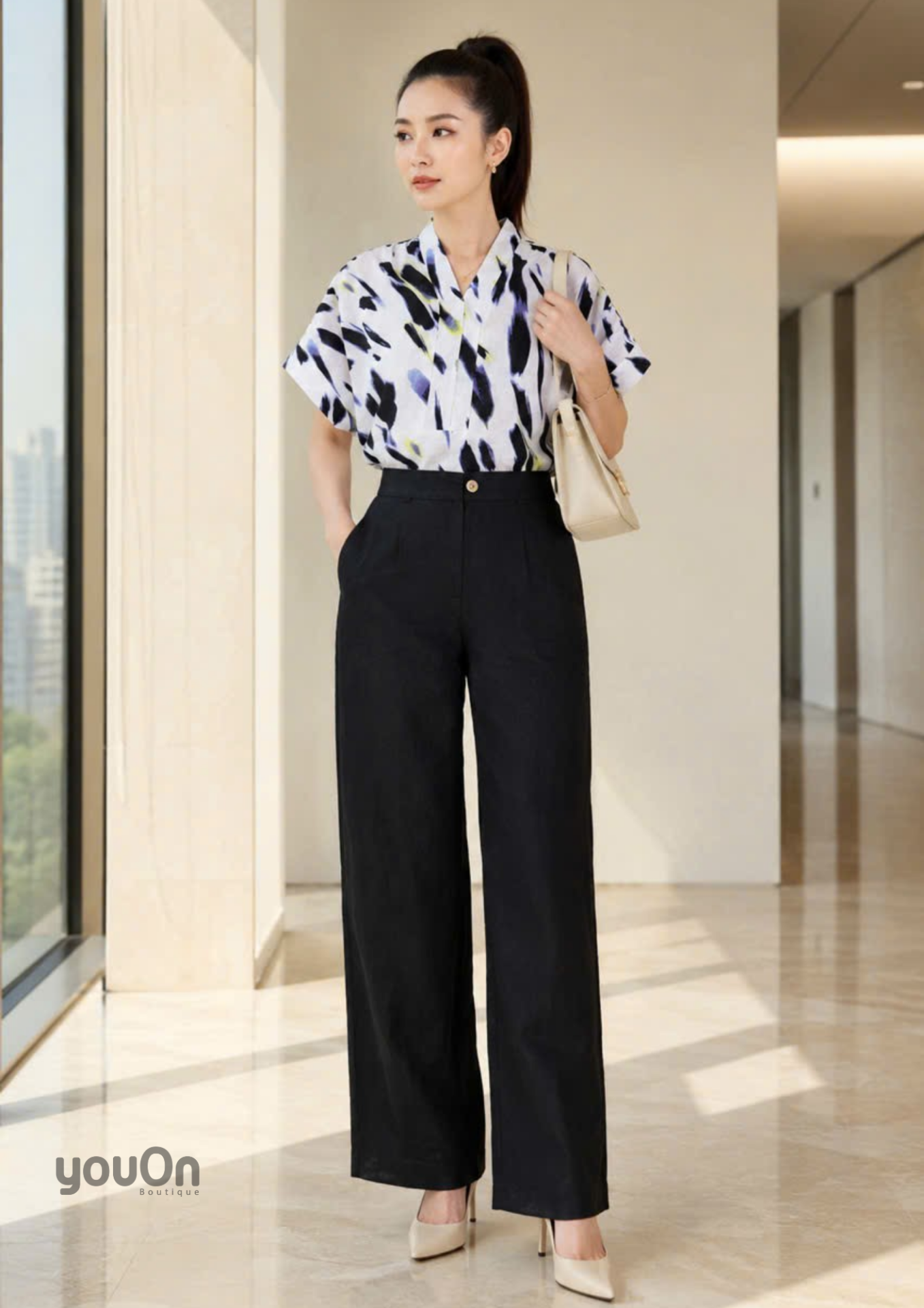
The climate is the first. Daytime temperatures regularly climb past 32 °C with humidity above 70 percent. A fabric that breathes, wicks, and dries quickly becomes more than a style preference—it becomes a comfort strategy. Linen shirts, wide-leg trousers, and simple dresses move with the body rather than trapping heat.
Packing is the second advantage. Linen compresses surprisingly well and emerges from a suitcase with a lived-in softness that many travelers find more appealing than crisp, pressed alternatives. The natural wrinkles are part of the fabric’s character; they read as relaxed rather than neglected.
Style is the third. Linen carries a timeless, editorial quality that works equally well for a morning coffee in Thao Dien, a visit to the Old Quarter, or an evening along the river. Its matte texture photographs beautifully and pairs easily with the minimal aesthetic favored by many international visitors. Because pure linen improves with wear, a few well-chosen pieces often serve an entire trip and beyond.
Finally, there is the quiet pleasure of wearing something that feels connected to place. In a country where craft and natural materials are still valued, linen sits comfortably alongside Vietnam’s own textile traditions without imitating them. It simply performs.
Chất Vải Linen Là Gì Nguồn Gốc Đặc Điểm Và Phân Loại Đầy Đủ Nhất 2026
FAQ
Does linen wrinkle easily?
Yes, linen wrinkles more readily than many synthetic or blended fabrics. Those soft creases are considered part of its natural character rather than a flaw. Many travelers find that the lived-in look actually enhances the relaxed elegance of the cloth, and light steaming or hanging in a steamy bathroom is usually enough to refresh a garment between wears.
Is linen good for hot weather?
Linen is one of the best natural fabrics for hot, humid weather. Its hollow fibers allow air to circulate and moisture to evaporate quickly, creating a cooling effect against the skin. In climates like Vietnam’s, this performance difference is noticeable within the first hour of outdoor wear compared with denser cottons or synthetics.
How do I care for linen while traveling?
Hand-wash or use a gentle machine cycle with cool water and mild detergent, then hang to dry. Avoid high heat in the dryer, which can make the fibers brittle. Most linen pieces can be worn slightly damp and will finish drying on the body, reducing the need for ironing. A compact travel steamer handles residual creases efficiently.
What does pure linen meaning actually refer to?
Pure linen meaning indicates that the fabric is made entirely from flax fibers with no cotton, polyester, or other blends. This 100 percent composition preserves the full breathability, strength, and moisture-wicking properties that define quality linen. Always check the fiber content label if purity matters for climate performance.
Why is linen clothing Vietnam so often recommended to visitors?
Vietnam’s heat and humidity reward fabrics that stay cool and dry quickly. Linen meets those needs while offering a refined, minimal aesthetic that suits both city exploration and slower days. Travelers appreciate that a few pure linen pieces can cover most of a trip without feeling heavy or formal.
Closing
Whether you are spending a few days or a longer season in Vietnam, understanding what is linen fabric opens a practical and quietly elegant way to dress for the climate. The material’s long history, natural performance, and refined hand make it a thoughtful companion for travel. If you find yourself in Ho Chi Minh City or Hanoi, you are welcome to visit one of the youOn Boutique showrooms in Thao Dien, near Ben Thanh, or on Hang Trong to experience the fabric in person and see how it moves in real light.
Wikipedia Linen: https://en.wikipedia.org/wiki/Linen
Vogue Linen Guide: https://www.vogue.com/article/linen-fabric-guide
Textile Exchange: https://www.textileexchange.org/
Địa chỉ:
Địa chỉ: 29 Thảo Điền, P. An Khánh, TP. HCM
Địa chỉ: 40 Lưu Văn Lang, P. Bến Thành, TP. HCM
Giờ mở cửa: Thứ Hai – Chủ Nhật: 9:00 – 21:00
Địa chỉ: 106 Hàng Trống, P. Hoàn Kiếm, TP. Hà Nội
Hotline: 0862 103 050 (9:00 – 21:00 hàng ngày)
Khám phá thêm bộ sưu tập đầm dài và áo công sở tại YouOn Boutique ngay hôm nay.
Giờ mở cửa: Thứ Hai – Chủ Nhật: 9:00 – 22:00